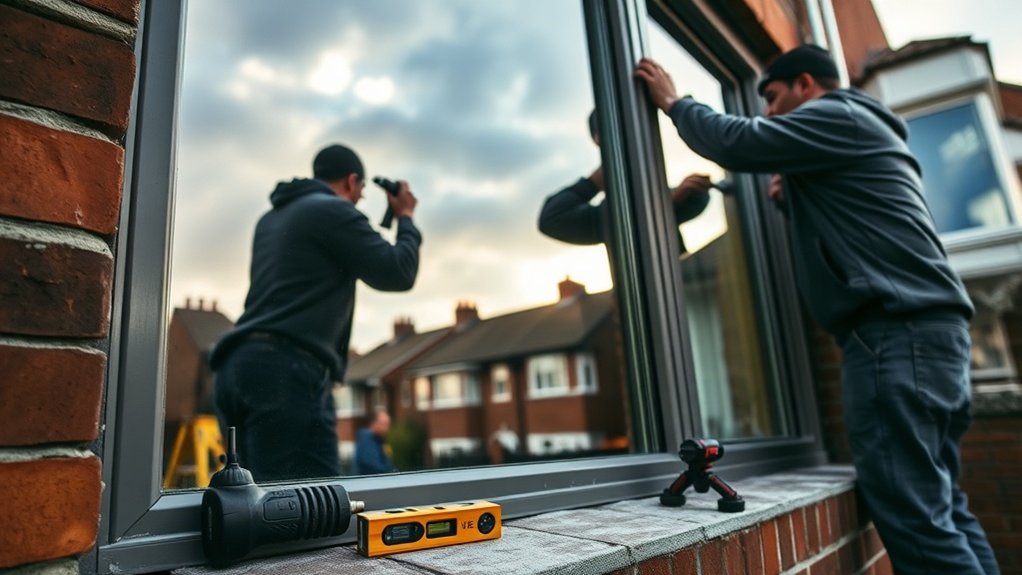
Window installation in Heathrow involves more than picking a frame colour from a brochure. Our team fits new windows across the district every week, and the jobs that go smoothly share the same preparation: the property's planning status has been checked, the glazing specification meets Building Regulations, and the frames have been chosen with local weather in mind rather than price alone. Below we walk through each of those decisions, along with realistic costs, common faults and warranty care.
Key insights
- Confirm whether your Heathrow home sits in a conservation area or is listed before ordering, because that decides which profiles and materials the council will accept.
- Use a FENSA-registered installer so the work is self-certified against Building Regulations for thermal performance, safety glass, ventilation and escape openings.
- Pick frames that cope with wet, exposed conditions: multi-chamber uPVC, thermally broken aluminium or alu-clad timber composites all hold up well in Heathrow.
- Specify low U-value sealed units (argon fill, low-E coating, warm-edge spacer) with a WER of A or better to reduce heat loss and condensation.
- Get at least three itemised quotes that separate labour, product, disposal and extras so you can compare Heathrow installers properly.
Key Things to Know Before Installing Windows in Heathrow
Three things shape every window project we take on in Heathrow: the weather the elevation faces, what the planning department will permit, and the performance figures the finished window has to achieve. Streets of Victorian and Edwardian terraces in the older parts of the district often fall under conservation designations, and there the council takes a close interest in frame depth, glazing bar layout and whether timber or uPVC is acceptable on a front elevation.
The first practical step is working out which approvals apply. Most like-for-like replacements need only Building Regulations sign-off, but a change of material or style on a protected street may need a householder application. Alongside that, look at the numbers: the U-value of the whole window, its air leakage class, and its sound insulation where the house sits near a main road or railway. Any decorative glazing, leaded lights or coloured panels should sit comfortably with the neighbouring houses while still using modern sealed units and secure hardware. Ask the installer for accreditation evidence, a manufacturer-backed guarantee and written compliance paperwork.
How Heathrow’s Climate Affects Your Window Choice
Once the paperwork questions are settled, the window itself has to be matched to the conditions it will live in. Heathrow gets a lot of rain across the year, temperatures swing from frosty mornings to warm afternoons, and the more open elevations take real wind.
We recommend choosing products on their tested weather classes rather than on marketing language. Every certified window carries ratings for air permeability, watertightness and wind load, and those figures tell you far more than a "storm-proof" label. Upper floors and gable ends deserve a higher class than a sheltered rear window.
Seasonal patterns matter as well. Mild, damp winters and humid summers push condensation risk up, make frames expand and contract, and wear gaskets faster. Warm-edge spacer bars and the right glass make-up keep the inside pane warmer, which cuts condensation and the thermal stress that shortens the life of a sealed unit.
Best Window Materials for Heathrow Homes
Frame material is a trade-off between stiffness, how well it sheds water, insulation, and how much looking after it needs across a service life of three or four decades. In Heathrow's rainfall and wind, uPVC, aluminium, timber and composite frames each age in their own way.
For a tight budget with minimal maintenance, a multi-chamber uPVC profile with steel reinforcement gives solid thermal figures and good weather resistance. Thermally broken aluminium suits large openings, slim frames and high wind loads and heavy glass such as acoustic laminates or stained glass panels. Engineered timber remains the natural choice for period frontages if you accept repainting every few years, and it can be repaired rather than replaced. Where budget allows, alu-clad timber composites combine a weatherproof aluminium skin outside with warm timber inside, giving excellent airtightness, low condensation risk and a finish that works with traditional trims and architraves.
Window Styles for Heathrow’s Period and Modern Properties
Heathrow has everything from bay-fronted terraces to recent apartment blocks, so the right style depends on the building in front of you. On older houses the question is usually how to keep the sash proportions and sightlines the street expects while bringing insulation and ventilation up to current rules. Newer homes can take casements, tilt-and-turn units or large fixed panes that meet the U-value, solar gain and security requirements in Approved Document L.
Timber Sash Replacement Options
Box sash windows on a Victorian terrace near Sipson or on a converted townhouse flat need careful handling. We begin with a survey of the existing frames: if the boxes and pulleys are sound, overhaul and draught-proofing with new double-glazed sashes may be the better route; rotten cills and split boxes justify full replacement.
On a protected street the new window should copy the original section sizes, with the meeting rail at the same height, matching glazing bar widths and the correct horn shape. Modern sash makers use laminated or modified softwood that stays dimensionally stable in damp conditions.
Spring balances allow a slimmer box and smoother sliding, whereas traditional cords and cast weights keep the authentic look that conservation officers prefer. Trickle ventilation can be concealed in the head of the frame so the sightline stays clean. Before manufacture, we check the chosen design against the Heathrow planning constraints and any records of the house's original joinery.
Contemporary Energy-Efficient Designs
From Georgian villas to new-build flats, the same principles produce a modern, efficient window that still suits the elevation. The core is a high-performance sealed unit: double or triple glazed, with a low-emissivity coating, warm-edge spacer and argon (or krypton for very slim units) between the panes to keep the centre-pane U-value down.
On period houses this glass can go into slimline timber or alu-clad frames with narrow sightlines and applied or integral glazing bars, so the facade keeps its rhythm. Modern properties can take large fixed panes paired with opening casements or tilt-and-turn sashes, which balances winter solar gain against the need for quick purge ventilation in summer.
Frame choice follows the same logic: thermally broken aluminium or composite profiles, continuous airtightness tape at the reveal, and insulated cavity closers around the opening. Trickle vents or MVHR-compatible details keep the fabric airtight without trapping moisture inside the room.
Window Installation Costs in Heathrow: A Price Guide
Budgeting for new windows in Heathrow is easier with local reference prices for both product and labour. We break every estimate down by window type, size, glass specification, frame material, access (scaffold or tower) and any structural work such as a new lintel. Lay competing quotes out the same way and the comparison becomes simple.
Average Local Installation Prices
Prices across Heathrow vary with material and specification, so treat these as guide bands. A standard uPVC casement supplied and fitted typically falls in the £400 to £700 range. Aluminium windows with thermal breaks usually run from around £650 to £1,100 each, and timber frames, often required on conservation streets, generally sit somewhere between £750 and £1,300 per window depending on size and paint finish.
Specialist glass such as acoustic laminate, self-cleaning coatings or solar-control units pushes each band towards its upper end. For a whole house, a modest semi with eight or nine windows usually lands in the £3,500 to £7,000 bracket, while larger detached homes or full-frontage heritage replacements can reach £9,000 to £20,000. Ask for an itemised quotation so each line can be checked against these ranges.
Factors Affecting Final Cost
Per-window prices only tell part of the story in Heathrow. The finished cost depends on how the new unit has to connect to the wall, the insulation and the look of the house.
The main cost drivers are:
-
Performance specification – triple glazing, acoustic interlayers and premium coatings raise the unit price while lowering heating bills and future upkeep.
-
Structural and access work – widening openings, replacing lintels, scaffolding on upper floors or parking restrictions on tight terraced streets all add time and plant.
-
Customisation – woodgrain foils, RAL colours, integral blinds, alarm contacts and other accessories lengthen both fabrication and fitting.
Settle your priorities on these points before inviting quotes so every installer prices the same thing.
Planning Permission and Conservation Rules for Heathrow Windows
Planning rules sound daunting but they come down to a few checks. Start by confirming whether the house is in a conservation area, is on the local list, or is statutorily listed. A listed building needs listed building consent for almost any window change, and a conservation area may have an Article 4 direction removing permitted development rights for front-facing windows.
The council publishes its designation maps and character appraisals online, and those documents describe the window patterns the area is meant to keep. Compare your proposed material, profile depth and opening style against them. If the change is visible from the street and falls outside permitted development, a householder application with scaled elevation drawings, a short heritage statement and the product data sheets is needed. On borderline cases a designer who knows the conservation team can usually agree a modern specification without a refusal.
Building Regulations and FENSA for Heathrow Window Installation
Replacement windows are controlled work, so before any order is placed the installation has to be shown to satisfy current Building Regulations and, in almost every domestic case, be certified under a competent person scheme such as FENSA. The rules cover thermal performance, structural support of the opening, background and purge ventilation, escape routes from habitable rooms upstairs, and safety glazing in critical locations such as low panes and glazed doors.
Because we are FENSA registered, we self-certify the work and lodge it with the local authority; you receive a certificate that your solicitor will ask for on sale.
Tinted glass, leaded panels and other decorative options are fine, as long as they still achieve the same regulatory performance.
- Check the installer appears on the FENSA register and offers an insurance-backed guarantee.
- Ask for written confirmation that safety glass to BS EN 12600 is used wherever Part K requires it.
- File every certificate alongside the deeds.
Energy-Efficient Windows to Cut Heating Bills in Heathrow
With compliance covered, the next decision is how far beyond the minimum to go on energy performance. For replacement windows in England, Approved Document L sets a limit of 1.4 W/m²K for the whole window, and we recommend choosing units at or below that figure with a Window Energy Rating of A or A+. Argon-filled double or triple glazing, warm-edge spacers and a low-E coating together cut both conductive and radiant heat loss through the glass.
The frame matters as much as the glass: multi-chamber uPVC or thermally broken aluminium limits the cold bridge around the edge. Glass can also be tuned by orientation, with a higher g-value on south-facing elevations for free winter warmth and a lower one on west-facing rooms that overheat on summer evenings. Slim profiles, matching colours and your choice of handles and glazing bars are all available at these performance levels.
Noise and Security Features for Heathrow Homes
Many Heathrow homes sit on bus routes or near the railway, so noise reduction is often part of the brief alongside security. Acoustic glass is specified to a target decibel reduction rather than guessed, and locking hardware should be tested to PAS 24 so it resists forced entry. Both depend on a frame stiff enough to keep keeps aligned and gaskets compressed for years.
Acoustic Glazing Options
Traffic noise, neighbours and intruders can all be addressed in the same window if the glass is specified as part of the design from the outset. Acoustic sealed units use a laminated pane with a sound-damping interlayer, two panes of different thickness so they do not resonate at the same pitch, and a wider cavity, which together break up the frequencies that dominate on the busier Heathrow roads.
A good acoustic specification sets three things:
- Reduction target – measure the current noise level, then pick glass with a certified Rw figure to match.
- Frequency mix – low rumble from lorries and buses needs a different interlayer from higher-pitched voices or sirens.
- Frame and seals – acoustic glass only works inside an insulated frame with continuous compression gaskets, otherwise sound bypasses the glass through gaps.
Security Locking Systems
Glass handles the noise; the lock decides how hard the window is to force. We fit multi-point locking as standard, with shootbolts or mushroom cams engaging at several points around the sash. That stops the sash being levered, and as a bonus it pulls the gaskets tight, which helps the acoustic performance too.
Internally beaded frames prevent the glass being removed from outside, and key-locking handles with anti-snap, anti-drill cylinders cover the rest. On tilt-and-turn and sliding windows, a proper locked night-vent position lets you ventilate a bedroom without leaving an entry point.
Smart window locks with encrypted wireless links, open/close logs and geofenced alerts are available if you want them integrated with a home system. Choose hardware designed for windows, and confirm the sensors work with your platform before ordering.
Frame Strength And Durability
Locks and glass both rely on the frame underneath them. A profile that flexes under wind pressure or vibration from passing traffic will let gaskets relax, lock keeps drift out of alignment and sound leak around the edges, so frame stiffness underpins security and acoustic performance in Heathrow.
Reinforced uPVC, thermally broken aluminium and composite sections all resist twisting and keep seals under compression. Equally important is the fixing: screws into solid masonry at the correct centres, with packers at hinge and lock points, prevent racking and distortion.
- Ask for tested wind-load and impact classes rather than general claims.
- Check acoustic claims against laboratory Rw figures for the complete window.
- Choose powder-coated or foiled finishes that shrug off corrosion, UV fading and warping.
How the Window Installation Process Works
A good fit in Heathrow follows a set order of work, and skipping a stage is where leaks and draughts begin. We start by checking the opening for square, looking at how the lintel carries the load above, and confirming any special glass such as tints or obscure patterns will suit the frame. The old window is then cut out, surrounding plaster and tiles are protected, and the reveal is cleaned and made good.
The new frame is offered up dry, checked for level and clearance, then fixed through the jambs or with frame anchors into the masonry. The gap around the frame gets low-expansion foam or backer rod with a flexible sealant, giving an airtight line inside. Outside, flashing tape and a sill tray carry rain away from the junction. Last come trickle vents, hardware adjustment and a test of every opener for smooth, secure closing.
Common Window Installation Problems in Heathrow and How to Avoid Them
Even with a disciplined sequence, Heathrow's damp climate, mixed housing stock and planning rules throw up the same faults again and again. The battles are with water, thermal movement and conservation constraints, all while keeping the window looking right and performing to spec.
The recurring issues, and what prevents them:
-
Water ingress and damp Use taped airtight membranes, cills with a proper fall and drained cavities. On wind-exposed elevations, ask for seals rated for driving rain and check them under a hose before sign-off.
-
Thermal bridging and condensation Thermally broken frames and warm-edge spacers keep the inner surfaces warmer, and a low-E coating chosen for the elevation's orientation stops cold spots forming at the glass edge.
-
Planning conflicts and poor aesthetics In conservation areas, pick profiles and glass that respect the street while still improving U-values, and get CAD sections or a sample corner approved before anything is manufactured.
Maintaining Your New Windows and Making the Most of Your Warranty
New windows in Heathrow keep performing for decades only if they get a little attention. Clean the glass with a pH-neutral cleaner, a microfibre cloth and a soft squeegee so low-E coatings and gaskets are not scratched. Every few months, inspect the frames, seals and drainage slots, and clear leaves and grit so water cannot back up into the frame.
Aftermarket tints or films should only go on with the manufacturer's agreement, because an unsuitable film can overheat a pane, crack it, and void the guarantee. Keep a dated log of any faults, with photographs, and retain invoices. Register the guarantee as soon as the job is finished, read the exclusions, and report any defect promptly through the installer's stated procedure so the claim cannot be refused on a technicality.
Our Heathrow glaziers handle this work alongside our other glazing services.
Frequently Asked Questions
Can New Windows Increase My Heathrow Property’s Resale Value or Rental Appeal?
New windows do help a Heathrow property sell or let. Lower heat loss improves the EPC band,. A tidy, consistent frontage lifts kerb appeal, and modern locks and acoustic glass are selling points on busier streets. To get the most from the investment, choose A-rated sealed units, an airtight fit and matching finishes across all elevations, then keep the FENSA certificate, Window Energy Rating labels and guarantee documents together so the improvement can be evidenced to a valuer or letting agent.
Do Heathrow Installers Offer Finance Plans or Buy-Now-Pay-Later Options for Windows?
Many installers in Heathrow, ourselves included, can offer finance through a partner lender. Typical arrangements are interest-free credit over a short term, low-rate loans over several years, staged payments tied to delivery and completion, or buy-now-pay-later plans. Before signing, compare the APR, any arrangement fee and early settlement charges, and work out the total repayable over the full term rather than the monthly figure alone. Check the lender is FCA authorised, and get the finance agreement and the installation contract in writing as separate documents.
How Do I Choose a Trustworthy Local Window Installer and Avoid Rogue Traders?
Judge an installer on evidence. Ask for public liability insurance certificates, confirm membership of FENSA or CERTASS on the scheme's own website, and look at reviews on more than one platform, giving weight to recent ones with photographs and detail. A reputable firm will provide a written, itemised quote, a clear start and finish date, named products with their performance ratings, and the guarantee terms in writing. Be wary of anyone who wants cash in hand, discourages a contract, or cannot say exactly which glass and frame system they intend to fit.
Can I Coordinate Window Replacement With Other Home Renovations to Reduce Disruption?
Combining window replacement with other works is sensible and usually saves money. The ideal slot is after any structural or lintel work and before plastering, decorating and new flooring, so reveals can be made good once. Put the windows on the shared programme with the other trades, noting access to each elevation and how new finishes will be protected. A short pre-start meeting with the builder, electrician and ourselves sorts out sequencing, waste routes and parking in one go, which keeps the disruption to a single short period rather than several.
What Should I Do With Old Windows—Can They Be Recycled or Repurposed Locally?
Old windows need not go to landfill. We separate glass, aluminium, uPVC and timber on removal, and each stream goes to a recycler that accepts construction glass and metals; uPVC in particular is widely reprocessed into new profiles. Sound timber sashes can be reused as secondary glazing, interior screens or cold frames for the garden, and reclamation yards will often take good period joinery. Where paint on older frames may contain lead, disposal must follow the correct hazardous waste route, so ask your installer for a waste transfer note that shows where everything went.
Summary
A well-planned window installation in Heathrow does more than replace glass: it brings the house up to current energy, safety and security standards while keeping its character intact. The gains in comfort and lower heating bills come from getting the sizing, fitting, hardware and paperwork right the first time. Call us for a free survey and itemised quote for your property.