Window restrictors stop an upper-floor window in Harlington opening beyond a set gap, normally around 100 mm, so a child or a vulnerable adult cannot fall out while the room still gets fresh air. In a rented flat, an HMO, a school or a care setting they are rarely optional: the Building Regulations (Approved Documents B, K and M), the Housing Act 2004 and HHSRS guidance all bear on them, and the hardware itself should be tested to BS EN 13126-5 with the window assessed under BS EN 14351-1. Landlords and building managers who ignore this can face improvement notices and claims. This page sets out when restrictors are needed, which type suits which window, how they should be fitted and how to check the ones you already have.
Key insights
- Window restrictors in Harlington limit the opening of upper-floor windows to reduce falls while keeping ventilation in homes, HMOs, schools and healthcare buildings.
- They should meet BS EN 13126-5 and the Building Regulations, and are effectively mandatory wherever children or vulnerable people live or stay.
- Cable, friction-stay, sash and concealed restrictors cover every common window type, including period timber sashes.
- Escape windows need a release that an adult can operate without a key but a child cannot.
What Window Restrictors Are and How They Work
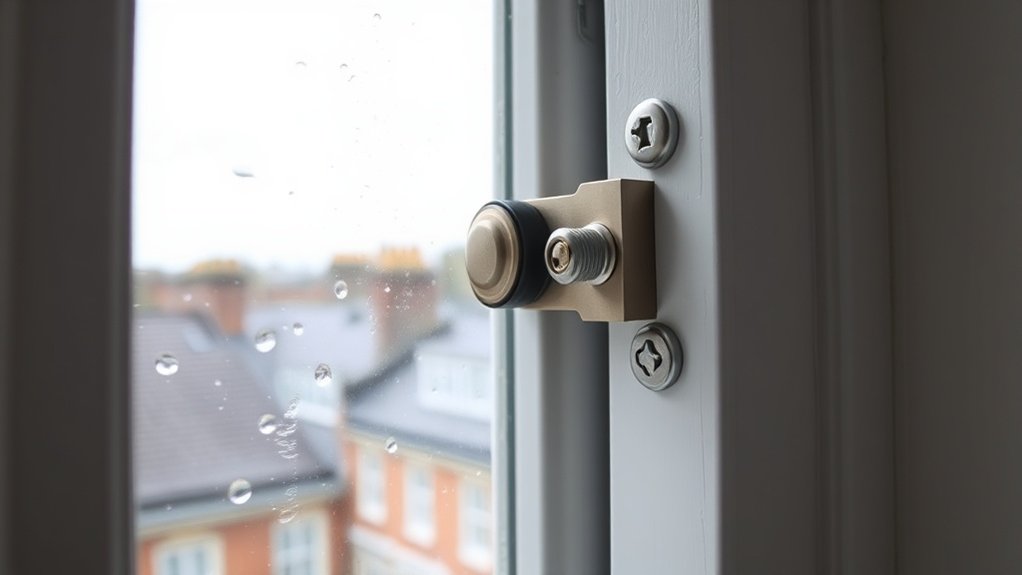
A window restrictor is a mechanical device that limits how far a sash, casement or tilt-and-turn window can open. It is usually a steel cable, a rigid arm or a friction stay with a built-in stop, combined with a lock or a release so the limit can be overridden deliberately.
The restrictor is fitted alongside the window's existing hardware, so the leaf opens to the safe gap for ventilation but cannot go further unless an adult releases it, typically with a key or a two-handed action. Current designs allow the opening angle, the holding force and the release method to be chosen to suit the room, and slimline or concealed versions keep period and modern windows looking as they should.
Harlington Laws on Window Restrictors
Installing or managing window restrictors in Harlington means working within building, housing and health and safety law at the same time. You are also responsible for ensuring the devices meet the relevant British and European standards, both when they are fitted and through ongoing maintenance. Failing in those duties can bring formal enforcement action: improvement notices, prohibition notices and fines.
Key Legal Requirements
- Building Regulations. Approved Documents B, K and M apply together: restrictors must limit openings in risk areas while escape windows remain usable in a fire.
- Housing and landlord law. Under the Housing Act 2004 and HHSRS guidance a landlord must prevent falls from windows, particularly where children may be present.
- Health and safety at work. Where the building is a workplace, window-opening risks fall under the employer's general duty to assess and control risks.
- Conservation and planning. On listed buildings and in conservation areas, visible restrictors may need listed building consent or planning approval.
Safety Standards Compliance
The hardware should be tested to BS EN 13126-5, which covers restrictor strength, durability and child-safety function, and the window as a whole is covered by BS EN 14351-1. You also need to show compliance with Approved Documents B and K and the Housing Health and Safety Rating System, with records of escape window provision, maximum opening gaps and load resistance. Favour independently certified products, keep the installation paperwork and add the details to your asset register so they are available at every audit.
Enforcement And Penalties
- Local authority action. Environmental health officers can serve improvement or prohibition notices where restrictors are missing, faulty or neglected, especially in HMOs and other higher-risk housing.
- Criminal sanctions. Serious or repeated breaches can lead to prosecution and fines under housing or health and safety law.
- Civil claims. A fall from a window can lead to negligence and occupiers' liability claims, with damages that reflect how far the owner fell short of documented compliance.
When Are Window Restrictors Legally Required in Harlington Homes?
Working out when window restrictors are legally required in a Harlington home means separating the statutory duties placed on landlords from the best-practice measures a family should take anyway. A landlord has to meet housing, fire safety and building regulations that can require restrictors in higher-risk settings, particularly where there is a risk of falls from height. A parent or carer is not bound by the same rules in every room, but following the same standards is the sensible approach.
Legal Requirements For Landlords
- Housing Health and Safety Rating System. Falls from windows are assessed as a hazard, and a Category 1 or 2 rating obliges you to fit restrictors where the risk is more than trivial.
- Building Regulations, Approved Document K. New builds and major refurbishments must limit upper-floor openings or rely on compliant restrictors.
- HMO licensing conditions. Many councils write restrictors on upper-storey windows into licence conditions for HMOs.
- Common law duty of care. A landlord must take reasonably practicable steps, often including restrictors, wherever a fall is foreseeable.
Safety Rules For Families
There is no single rule in Harlington, UB3 saying a family home must have window restrictors. If you live above ground floor with young children, though, the Building Regulations and HHSRS guidance expect robust fall prevention, which makes restrictors a practical necessity as part of childproofing. Escape still has to work: on designated escape windows the restrictor must be releasable without a key but hard for a child to operate. Give priority to windows with low cills, windows with a bed or furniture underneath them and rooms where balcony guarding is poor.
Window Restrictor Safety Standards and Testing
The main references are BS EN 13126-5 for the hardware, BS EN 14351-1 for the window and the Building Regulations, and together they require the restrictor to withstand set loads, repeated use and misuse without obstructing emergency escape.
- Performance testing: resistance to applied force, durability over thousands of cycles and reliable operation of the override.
- Documentation: test certificates, CE or UKCA marking and traceable batch information.
- Appearance: compact, colour-matched hardware that suits the façade and any conservation constraints.
- Cost: judged over the whole life, covering product price, fitting complexity, maintenance intervals and the liability avoided by being compliant.
Types of Window Restrictors Used in Harlington Properties
You will come across several distinct restrictor types in Harlington, each suited to particular windows, risk levels and legal duties. The common ones are cable restrictors, friction stays with a built-in limiter, locking ventilators and concealed restrictors housed within the frame.
Casement and tilt-and-turn windows are usually fitted with friction stays or cable restrictors, which give a defined opening angle and satisfy child-safety guidance. Sliding sashes in period houses take retrofit sash restrictors that sit discreetly on the frame and limit the lift of the lower sash. High-rise and high-occupancy blocks call for lockable, heavy-duty restrictors that match the stricter duty of care. In every case you are balancing mechanical performance, tamper resistance, cleaning access and the conservation expectations found across Harlington.
Installing Window Restrictors Safely and Correctly
Fitting restrictors starts with devices that meet UK safety standards and suit the window type, opening size and building use in Harlington. A controlled, step-by-step method then ensures the fixings, position and opening limit meet the regulations.
Choosing Suitable Restrictors
Before buying anything, establish the risks, the window types and the legal duties that apply, because those decide what counts as a suitable device. On period buildings the choice also has to respect the fabric and appearance of the window without weakening fall prevention.
- Risk and users. Quantify fall heights, vulnerable occupants and how often the window is used to set the allowable gap.
- Window construction. Match the fixing method to the frame material, sash weight and clearance around existing hardware.
- Regulatory fit. Choose products certified to the relevant British Standards and any sector guidance that applies in Harlington.
- Operation and security. Prefer restrictors with tamper-resistant releases, a clear visual indication of status and durable components.
Step-By-Step Installation
Check the substrate first, fixing into brick, concrete, solid timber or the steel reinforcement of a uPVC sash with the anchors the manufacturer specifies. Mark the opening limit to the 100 mm child-safety guidance, then pilot-drill to avoid splitting or cracking the frame. Position the fixings so they do not spoil the look of the window or block cleaning access. Tighten screws to the recommended torque, then load-test the restrictor to confirm it holds the forces set out in BS EN 13126-5. Finally, record the fixings, test results and locations in your asset register to support inspections and future retrofits.
Retrofitting Window Restrictors in Older Harlington, UB3 Homes
Most period properties in Harlington predate current safety standards, but compliant restrictors can usually be retrofitted without harming heritage features if the regulations and manufacturer guidance are followed.
- Identify the window type (box sash, casement, Crittall steel) and check the frame is sound before choosing a model.
- Check whether listed building consent or conservation area policy affects the installation.
- Select restrictors tested to BS EN 13126-5 and child-safety guidance, with the right opening limit and robust fixings.
- Use a competent installer who records the products, fixing points and certificates, giving insurers and landlords a clear compliance trail.
Common Window Restrictor Issues and How to Fix Them
As restrictors age, or where they were never right for the window, predictable problems appear that undermine compliance and usability in Harlington properties. Diagnose each methodically and align the fix with BS EN 13126-5, HHSRS guidance and fire escape requirements.
- Stiff or seized mechanisms: lubricate the moving parts with a non-staining silicone spray; where corrosion has set in, replace with stainless or marine-grade hardware.
- Non-compliant opening gaps: measure the opening and fit certified restrictors limiting it to 100 mm where required.
- Clumsy fittings on heritage frames: switch to low-profile, colour-matched units that preserve sightlines and fabric.
- Tampering or bypassing: use tamper-resistant fixings and lockable designs with controlled key management.
How to Check If Your Window Restrictors Are Compliant
The law only protects occupants if the restrictors on the windows actually meet the standards, so look at both mechanical performance and paperwork, and make sure any decorative changes to the window have not undermined the protection.
- Identify the standards: confirm compliance with BS EN 13126-5, BS EN 14351-1 and the Building Regulations (Approved Documents B and K), plus any council or Housing Act guidance.
- Check the markings: look for the manufacturer's mark, CE or UKCA symbol, product code and the installation date.
- Test the operation: measure the initial gap (normally 100 mm or less), push against the restrictor to confirm it holds, and check the emergency release works as intended.
- Review the fitting: confirm the fixings suit the frame material, are not obstructed by secondary glazing, blinds or trims, and can be reached for maintenance.
It forms part of the security glazing service we run across Harlington. If this is not quite what you need, we also cover window security bars and window lock repair.
Frequently Asked Questions
Can Window Restrictors Affect My Home Insurance Coverage or Premiums in Harlington?
They can, mainly on the liability side. A landlord policy for a Harlington flat or HMO may ask whether upper-floor windows are restricted, and an accurate answer matters if a claim is ever made. Some insurers offer modest premium adjustments or wider liability cover where restrictors meet the relevant British Standards. Declare the installation, keep proof of professional fitting and inspection dates, and ask the insurer to confirm in writing that the devices are recognised.
Are There Child-Friendly Window Restrictor Designs That Are Visually Discreet or Decorative?
Yes. The most discreet options are slim cable restrictors in white, black or a colour matched to the frame, concealed restrictors built into the friction stay, and locking handles with the restriction integrated into the handle itself. For period timber sashes, small brass or chrome sash stops sit on the frame and look like original ironmongery. All of these still limit the gap to around 100 mm with a release a child cannot work.
How Do Window Restrictors Impact Property Valuations or Surveyor Reports in Harlington?
Restrictors seldom add to the valuation directly, but they help the survey read well. Surveyors routinely comment on upper-floor windows with low cills, full-height glazing and openings above hard landscaping, and a tested restrictor removes the hazard they would otherwise flag. For a rental or HMO in Harlington, the absence of restrictors can appear as a compliance caveat or a recommendation for immediate work, which buyers use to negotiate.
Can Smart Home or App-Controlled Window Restrictors Be Used Legally in Harlington Homes?
Yes, provided the smart features do not compromise the basic safety functions. The restrictor must still limit the opening to the child-safe gap, keep a manual override that an adult can operate on the spot, and fail safe if power or the network drops, so a window cannot be left unrestricted or an escape route blocked. Check the product has the same BS EN certification as a mechanical restrictor and that the installer records the settings in your compliance file.
Are There Grants or Council Funding Schemes for Installing Window Restrictors in Harlington, UB3?
There is rarely a dedicated grant for window restrictors in Harlington, but funding can sometimes be found indirectly. A Disabled Facilities Grant may cover restrictors as part of adaptations for a disabled resident, and council home safety schemes occasionally include them where a risk assessment justifies the work. Social landlords usually fund compliant restrictors from capital or fire safety budgets. Check current guidance from your local council, as eligibility changes from year to year.
Summary
Window restrictors are a proven, low-cost way to prevent falls from upper-floor windows in Harlington and a recurring requirement in HMO licensing, housing inspections and the Building Regulations. Choosing certified hardware, testing it after fitting and keeping the records balances safety, ventilation and legal compliance. If you need restrictors specified, fitted or checked on a property in Harlington, UB3, call us for a free survey and quote.